

AI for Restaurants and Cafes: Menus, Reviews, Social Posts and Staff Schedules
A practical operator guide to using AI for menu copy, allergen checks, review responses, social planning, rotas, suppliers and promotions.
AI can help a restaurant or cafe operator turn a week of scattered tasks into usable drafts: menu descriptions, review replies, social posts, supplier emails, rota options and promotion ideas. It does not verify allergens, employment rules, stock, food safety or whether a promise can be delivered during a busy service. An owner or manager must approve every customer-facing and operational decision.
Key Takeaways
- Keep menu facts and allergen information separate from persuasive copy.
- Answer reviews with a human tone and a clear internal follow-up.
- Build a social calendar around real dishes, events and capacity.
- Use rota drafts as options that managers check against availability and rules.
- Krater combines 400+ models, Personas, Keep and Tasks for operators, with Predictable $20/month pricing on Pro.
Start with an operator fact sheet
Create one controlled source containing opening hours, service style, menu items, ingredients supplied by the kitchen, dietary labels approved by the responsible person, booking rules, delivery areas and the voice you want customers to hear. Mark which facts are permanent and which change weekly. Give AI the current version when drafting rather than asking it to infer details from an old social post.
Keep prices, availability and allergen notes in fields that staff can update quickly. A beautiful paragraph is not a substitute for a current recipe card or food safety process. Ask AI to show every claim it cannot find in the fact sheet. That makes review faster and reduces the chance that a generated description promises a garnish, ingredient or service the team cannot provide.
Write menu descriptions customers can trust
A useful menu description names the main ingredients, cooking style, flavour profile and portion context without turning a simple dish into a string of inflated adjectives. Start with the customer's decision: is it light, filling, spicy, shareable, seasonal or suitable for a short lunch break? Keep the sentence length appropriate for the menu format. A counter board needs a different draft from a full online menu.
Treat allergen and dietary information as a separate controlled layer. AI may omit a sauce, garnish, cross-contact warning or supplier change. Have the responsible kitchen or food safety person check the final text against current records. Never ask the model to certify a dish as safe. It can format approved information, but the business owns the accuracy and the communication.
Respond to reviews without sounding copied
Sort reviews into praise, service issue, food issue, facilities issue, delivery issue and possible fraud or abuse. Thank the writer for specific positive details, acknowledge a real problem without arguing and move the conversation to a private channel when personal information is involved. For a recurring complaint, create an internal action rather than writing five variations of the same apology.
Ask AI to draft a short public response plus an internal note for the manager. The public version should not reveal a customer's order, health detail or contact information. If a review claims something that is factually wrong, check records before correcting it. A defensive reply may win a point and lose the next customer reading the thread.
Plan a month of social posts
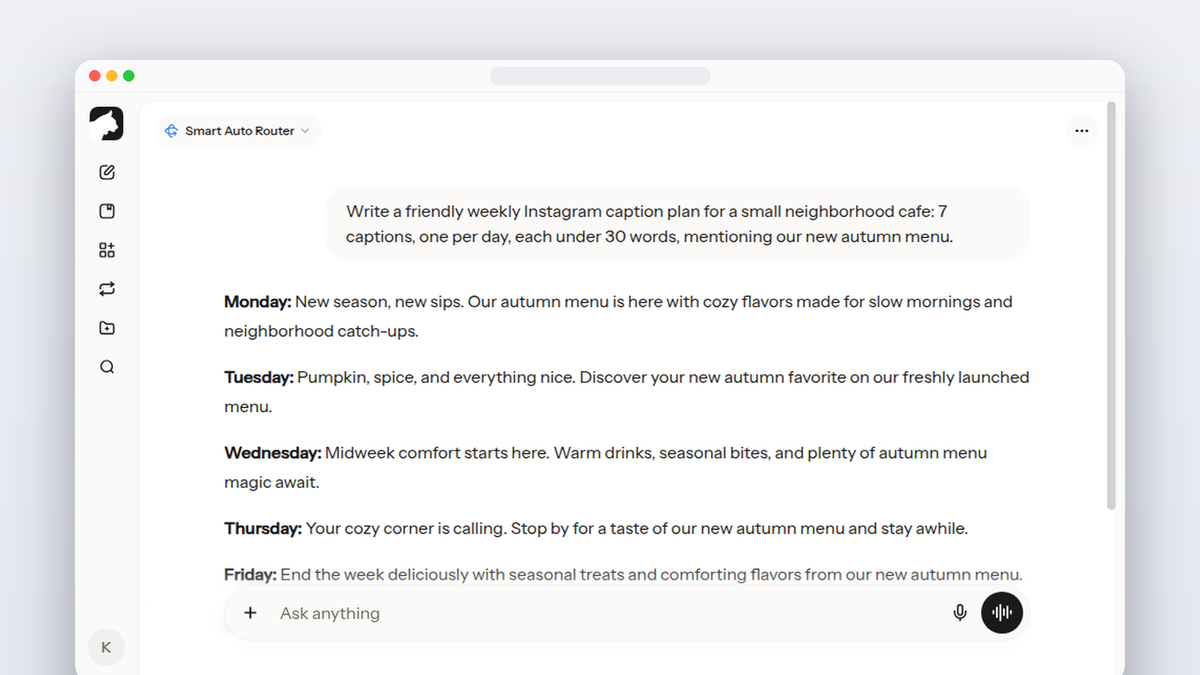
Build a calendar from actual assets: a new dish, a supplier story, a staff introduction with consent, a quiet service period, a local event, a behind-the-scenes preparation or a customer question. Give every post a purpose and a next action. Some posts can invite bookings, while others simply make the food and the people behind it memorable.
Ask for variations by channel and length, but keep the same approved facts. Do not let AI invent a sold-out event, a local claim or a health benefit. Schedule a review before publishing so the person on shift can flag a last-minute closure or ingredient change. A smaller calendar that stays accurate is more useful than a large plan that the team abandons after one busy week.
Draft rota options responsibly
A rota prompt should include opening hours, service blocks, roles, availability, contracted hours, requested leave, training, breaks and the minimum coverage each period requires. Use labels rather than unnecessary personal details. Ask for two or three options and a list of conflicts. A model can arrange information, but it cannot see the human context behind a request or decide whether a schedule complies with local employment requirements.
The manager should check every shift, break, skill requirement and handover. Keep a clear record of who approved the rota and how changes are communicated. If the model proposes a gap, show it plainly rather than filling it with a guess. Staff trust a schedule more when the owner explains the decision and provides a route for corrections.
Supplier emails and service recovery
Supplier communication benefits from a short subject, an item list, required date, delivery window, substitution question and contact for confirmation. Ask AI to turn a rough note into a message that is easy to answer. Keep quantities, units and product codes visible. If a shortage affects a menu, create an internal update at the same time so front of house does not promise a dish that the kitchen cannot serve.
For a service failure, prepare a recovery sequence: acknowledge the issue, protect the immediate customer experience, record the cause and decide what follow-up is appropriate. A generated apology should not offer a discount or refund outside the policy you approve. Ask the model for options, then let the manager choose based on the customer, the facts and the business's authority.
Promotion ideas that fit capacity
A promotion needs a clear commercial reason. It might fill a quiet midweek period, introduce a seasonal dish, increase average order value or encourage reservations for a new service. Give AI the capacity limits, margin guardrails, preparation time and exclusions. Ask for ideas that do not depend on discounting if the goal is awareness or repeat visits.
Check every promotion against stock, staffing, booking systems and the customer journey. A viral post that the kitchen cannot fulfil is not a marketing win. Ask for a simple measurement plan such as covers, booking conversion, repeat visits or response to a new menu item. Keep the result in a monthly review so the team learns which ideas worked rather than starting from zero each time.
Six prompts for restaurant operators
1. Turn this approved menu fact sheet into descriptions for a printed menu and a web menu. Do not add ingredients or health claims.
2. Draft three responses to this review: warm, concise and accountable. Keep private details out of the public reply.
3. Build a four-week social calendar from these real dishes, events, assets and opening hours.
4. Create two rota options from these availability and coverage rules. Show every conflict and do not invent staff availability.
5. Turn this supplier note into a clear order confirmation request with quantities, units and required dates.
6. Suggest five promotions that fit this capacity and margin brief. Include the operational risk and a simple measure for each.
Have the appropriate owner, manager or food safety lead review the result. AI can speed the first draft, but the business must approve what reaches a customer or employee.
Model comparison for restaurants and cafes
| Approach | Useful strength | Best operator task |
|---|---|---|
| Fast model | Short customer copy | Review reply |
| Reasoning model | Balances constraints | Promotion plan |
| Long context model | Uses source sheets | Menu and supplier drafts |
| Krater | 400+ models, Keep and Tasks | Connect copy, rota and follow-up |
A fast model works for a single reply, while a reasoning model helps compare promotions against capacity. Long context is useful for a controlled menu sheet and supplier history. Krater gives an operator one place to compare outputs, keep approved facts and turn follow-up into Tasks with Personas for brand voice and manager review.
Protect staff and customer information
Do not paste full customer names, card details, health information, private booking notes or employee records into a prompt. Use order labels and role labels. Keep staff availability to the minimum needed for the schedule and follow your own employment and privacy policies. Review account access so only authorised people can see saved material.
Use /keep for approved menu facts, /tasks for supplier and service follow-up and /personas for the venue voice. Delete outdated drafts and mark the date of the current source sheet. Operational clarity comes from ownership and review, not from allowing a model to become an unexamined second manager.
Review the work at service speed
A draft that needs twenty minutes of interpretation will not survive a busy lunch. Give each recurring output a compact approval checklist. For a menu description, check ingredients, portion, price and dietary wording. For a review response, check the order history and whether the proposed promise is authorised. For a social post, check the dish, date, booking route and image rights. For a rota, check coverage, breaks and the handover.
Assign the check to a role rather than an unnamed group. The kitchen lead may own ingredient confirmation, the manager may own public replies and the owner may approve promotions. Ask AI to place the checks in the same order every time so a new team member can follow them. When service is under pressure, a short approved template is safer than asking a tired person to edit a large generated paragraph from scratch.
Learn from the weekly numbers
At the end of the week, compare the plan with a small set of operational numbers: covers, average order value, cancellations, review themes, waste, staff gaps and the promotion that was actually delivered. The model can organise the notes and suggest questions, but it should not turn a single quiet day into a conclusion. Look for patterns across comparable service periods and write down what changed.
Ask for one action per finding. If a dish sold well but slowed the pass, the next test might be a prep change rather than more promotion. If a review mentions confusing booking instructions, rewrite the instruction and check whether the next questions reduce. If a rota repeatedly leaves one role exposed, review the staffing assumption with the team. A measured loop gives AI useful material and gives the owner a reason to keep using it.
Keep customer promises aligned
Before a campaign, menu change or booking push goes live, compare the public wording with what the team can deliver during the busiest realistic period. Check opening times, table duration, collection windows, substitutions, accessibility information and the route for questions. Ask AI to make a promise checklist from the draft, then have the person responsible for service sign it off.
When circumstances change, update the customer-facing message quickly and explain the change without blaming staff or suppliers. A direct notice can preserve trust better than leaving an attractive but impossible offer online. Store the approved version with its date and owner. That small discipline prevents an old generated caption from continuing to create work long after the underlying menu or promotion has changed.
Frequently Asked Questions
Can AI write allergen information?
It can format information already approved by the responsible person. It must not certify safety or replace current ingredient and cross-contact controls.
Can AI answer every negative review?
It can draft options, but a manager should decide the response and investigate recurring operational problems.
Can AI make a staff rota?
It can arrange the constraints and show options. Check availability, breaks, skills, contracts and local requirements yourself.
Should a cafe automate social posts?
Use a review step before publishing so posts match stock, opening hours, events and the actual customer experience.
How can AI help with suppliers?
Give it quantities, units, dates and product codes and ask for a message that makes confirmation easy.
What does Krater add for operators?
It provides model choice, saved source material, Personas and Tasks in one workspace. Owners still approve operational decisions.
The Bottom Line
For a restaurant or cafe, AI is valuable when it removes drafting work without weakening control. Keep approved facts current, protect private information and make a named person responsible for every menu, reply, rota and promotion.