

How to Use AI to Declutter and Organize Your Home (Room by Room Plan)
A practical room by room decluttering plan using photos, simple decision rules, selling drafts and a maintenance routine.
AI can help you turn a messy room into a sequence of visible decisions. A multimodal model can describe what is taking up space in a photo, while a text model can help you sort items, write a selling listing and build a weekend plan. Do not upload photographs that reveal private documents, faces or identifying details unless you have removed them.
Key Takeaways
- Photograph one area at a time and remove private documents before uploading.
- Use clear keep, donate and sell rules so every item has a next step.
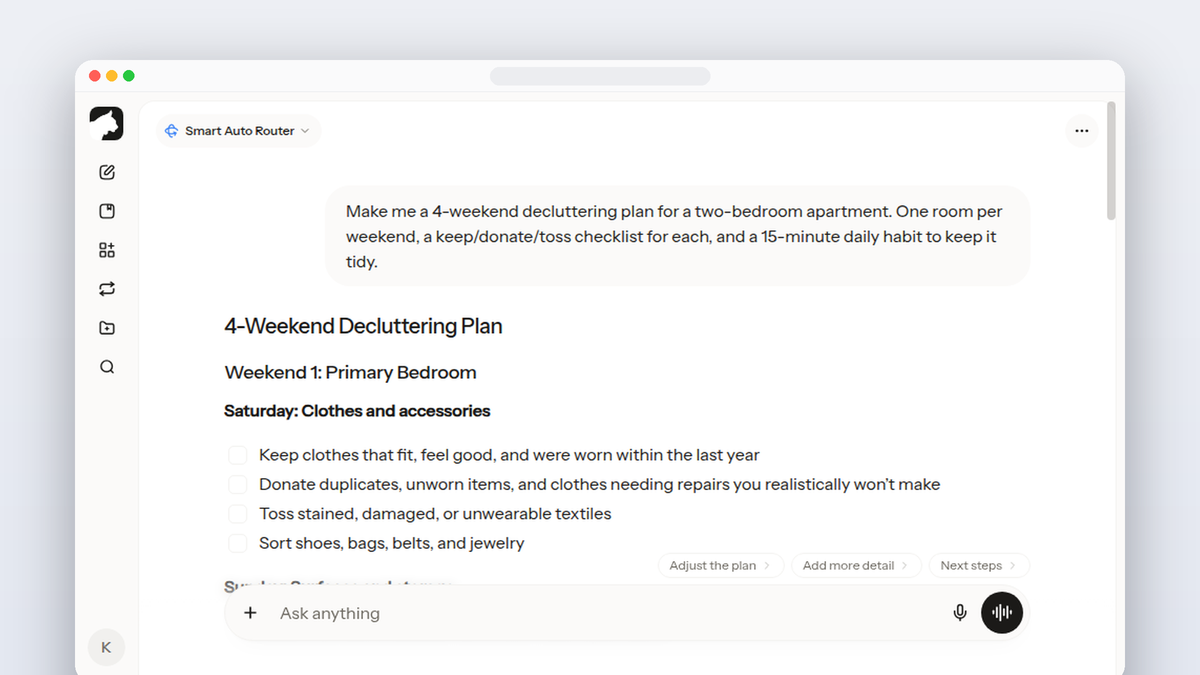
- Plan four weekends around one room or zone instead of trying to empty the whole home.
- Ask AI to draft listings, then check every measurement and condition detail yourself.
- Krater combines 400+ models, image understanding, Personas and Keep in one workspace.
Start with a safe room assessment
Take three photos of one room from the doorway, a corner and the main work surface. Blur faces, labels, addresses, paperwork and anything that identifies a child or another person. A photo based assessment is useful for visible categories such as piles, blocked surfaces, unused furniture and storage that is hard to reach. It cannot tell you the emotional value of an object or whether a box contains something important.
Ask the model to describe the room without judging you. Request a list of visible zones, the biggest source of friction, safety concerns and one small area that can be finished in twenty minutes. A neutral description is easier to act on than a dramatic claim that everything must be thrown away.
Use keep, donate and sell rules
Keep an item when you use it, need it for a known occasion, or would replace it if it disappeared. Donate when it is useful, safe and in a condition another person could reasonably use, but you have no plan to use it. Sell when the item has enough value to justify photographs, messages, packing and collection. Recycle or dispose of things that are broken, unsafe or not suitable to pass on.
Ask AI to turn these rules into questions you can answer in under a minute. What is it? When did I last use it? Do I own another version? Would I pay to move it? Is there a legal, sentimental or safety reason to keep it? The answer is still yours, but the questions stop every object becoming a fresh debate.
Weekend one: entry and living spaces
On the first weekend, start where clutter enters the home. Empty one basket, shelf or surface at a time, then create a landing place for keys, bags, post and shoes. In the living room, group books, cables, games, blankets and papers before deciding where they belong. Keep a donation bag open and a sell box labelled with the date you started it.
Use a timer and stop before you are exhausted. Ask AI for a ninety minute sequence with a ten minute reset at the end. The final reset matters because it leaves a clear floor and a visible next step. Take an after photo from the same angle, not as a performance but as evidence that one zone changed.
Weekend two: kitchen and dining
In the kitchen, group duplicate utensils, mugs, containers, spices and appliances. Keep the items that fit how you actually cook, not the person you imagine becoming. Check expiry dates and local disposal rules rather than asking AI to decide whether food is safe. Measure the shelves before buying organizers, because a container that looks tidy online can waste space in your cabinet.
Ask for a one drawer at a time plan and a maintenance rule for incoming items. For example, a new mug may mean one old mug leaves, or a new storage container must have a matching lid. The goal is not an empty kitchen. It is a kitchen where the thing you need is visible and easy to return.
Weekend three: bedrooms and clothes
Lay clothes out by type, not by drawer. Make piles for worn often, seasonal, special occasion, repair, donate and sell. Keep enough for the laundry rhythm you really have. Try on uncertain pieces once, then decide with a time limit. AI can suggest outfit combinations from a photo, but it cannot feel fabric, know your confidence or notice whether a garment needs specialist care.
For children, use a smaller decision set and involve them in choosing a donation box. For a shared bedroom, agree on private zones before moving anything. Ask AI to make a folding or storage routine that fits the shelves you own, then change the routine if it takes longer than putting the item away.
Weekend four: paperwork, storage and leftovers
Paperwork needs a different rule from clothing. Keep documents you are required to retain, scan only when it is safe and shred items containing personal information. Group warranties, manuals, household records and current tasks, then label the storage place with plain words. Do not upload account numbers or documents simply because a model can read them.
Finish the four weekends by opening the sell box and the donation bag. Anything you have not listed or delivered needs a decision. Ask AI for a final route plan: which items go to a charity, which need a buyer, which can be recycled and which belong in the home after all.
Write useful selling listings
A good listing names the item, brand or maker if known, dimensions, age or approximate use, condition, included parts, collection or delivery options and a fair description of marks. Photograph it in natural light with a clear background. Tell AI to draft a short title, a factual description and answers to likely buyer questions, but check every number and never let it invent a reason for selling.
Turn these verified details into a clear selling listing. Keep the measurements exact, describe wear honestly and list what is included. Do not add features I did not state.
Write three titles for this used item. Keep them factual, avoid hype and include the detail a buyer would search for.
Draft a friendly reply to a buyer who asks whether this item is still available. Ask one necessary follow up question and do not promise a collection time yet.
A maintenance routine that lasts
Choose a daily reset that takes five minutes and a weekly reset that takes twenty. The daily version might return shoes, cups and paperwork to their homes. The weekly version might empty the donation bag, process the sell box, clear the kitchen surface and return items that travelled between rooms. Put the routine next to something you already do, such as making coffee or charging your phone.
Create a five minute evening reset for this room using only the storage I already have. Put the tasks in the order that makes the biggest visual difference.
Make a weekly home maintenance checklist that prevents clutter from returning. Include incoming post, laundry, donations, items for sale and one surface that needs attention.
Look at this room photo and suggest three changes that make everyday items easier to put away. Do not recommend buying storage until you explain what existing space could work.
Model comparison for home organization
| Model type | Useful strength | Good home task |
|---|---|---|
| Multimodal model | Sees visible zones and objects | Photo assessment |
| Reasoning model | Applies decision rules | Keep, donate and sell sorting |
| Fast model | Short practical lists | Daily reset routine |
| Krater | 400+ models and saved context | Compare plans and keep room notes |
Use a multimodal model for visible layout, a reasoning model for trade offs and a fast model for short lists. Krater lets you keep the room plan and prompts together, use a Persona as a calm organizing partner and return to the same rules without starting from zero.
What not to outsource
Do not let AI decide whether a family object matters, whether a document is safe to discard, whether food is safe or whether a photograph reveals too much private information. Do not upload a room photo with passports, bills, school names or medication labels visible. You can crop the image, cover details or describe the problem in words instead.
Decluttering is not a contest. If an item carries grief, identity or a relationship, give yourself more time and ask a person you trust. AI can offer questions and categories, but a calm home is not created by following a stranger's rule that every object must earn its place immediately.
Make the result easy to maintain
After four weekends, do not immediately start another whole-home project. Walk through the rooms and note where items still land when you are tired, rushed or carrying shopping. Those landing points reveal what the home needs. A basket near the door, a hook at the right height or a tray beside the sofa may solve more than a complicated storage system.
Use /keep for the decisions you want to remember, /tasks for donations and listings with real dates and /personas for a gentle weekly reset coach. Ask for a maintenance plan that fits ten minutes on Sunday and two minutes after dinner. If a task repeatedly fails, change the location or reduce the number of steps instead of blaming yourself.
For items that leave the home, create a clear finish line. A donation bag should have a collection or drop-off date. A listing should have a price review date and a plan for unsold items. This prevents the hallway from becoming a second storage room. The purpose of organization is easier living, not an endless cycle of sorting. If an item has no realistic next action, decide whether it belongs in the home and give it a proper place.
Take measurements before asking for layout ideas. Record the width of a shelf, the height of a cupboard and the clearance needed for a door or drawer. A model can suggest zones from those facts, but the plan must respect the physical room. Test the route with the objects in your hands. If putting something away requires moving three other items, the system will fail on an ordinary weekday. Notice which cupboard doors open fully and which shelves are hard to reach. The best storage decision is often to move daily items into the easiest zone and reserve awkward corners for occasional use. Photograph the finished area only after removing labels, mail and personal documents from view. Leave a small amount of empty space where new items can land, because a system with no margin becomes difficult the first time you come home carrying bags. An empty shelf is useful capacity, not wasted space. Use a label only when it helps another person return an item without asking you. Too many labels create another maintenance job. Keep labels large enough to read and consistent across similar containers.
Frequently Asked Questions
Can AI see what is clutter?
A multimodal model can describe visible objects and zones, but it cannot know sentimental value or private context.
How do I decide what to sell?
Sell an item when its value justifies the work of photographing, listing, answering messages and arranging collection.
Should I buy organizers first?
Usually no. Measure what remains after sorting and use existing space before buying containers.
Can AI write a selling listing?
Yes, if you provide verified measurements and condition details, then check every generated claim.
How often should I reset a room?
A short daily reset and a weekly twenty minute review is easier to sustain than occasional exhausting clear outs.
Can I upload home photos?
Crop or redact private documents, faces, labels and identifying details before using any image service.
The Bottom Line
Use AI to make decluttering smaller and more concrete. Photograph one safe zone, apply your own keep, donate and sell rules, finish one room across four weekends and create a maintenance habit that fits real life. The best system leaves you with fewer decisions, not a new shopping list of storage products.