

How to Use AI to Plan a Wedding or Big Party (Budget, Timeline, Guest Messages)
A practical, human-friendly AI planning system for a wedding or large party, including timelines, guest messages, vendor questions and prompts.
AI can turn a large celebration into a set of small decisions you can actually handle. It can help you split a budget, build a six-month timeline, draft guest messages, compare vendor questions, plan seating and prepare a day-of run sheet. It cannot confirm venue availability, guarantee a supplier or know your family dynamics, so you remain the final decision maker.
Key Takeaways
- Start with a simple budget split and mark every figure as an estimate until a supplier confirms it.
- Use a six-month plan for big decisions and a six-week plan for confirmations and guest follow-up.
- Ask AI for vendor questions, not a confident recommendation based on incomplete information.
- Keep guest messages warm and specific, especially when chasing RSVPs or dietary details.
- Krater gives you 400+ models, Personas, Keep and image generation, with Pro at Predictable $20/month pricing.
Start with the shape of your celebration
Before you ask AI for ideas, write down the facts that will control every later decision. Include the date range, city or travel area, estimated guest count, daytime or evening timing, type of meal, accessibility needs and the feeling you want people to have when they leave. A wedding with seventy guests and a birthday party with one hundred and fifty guests may both need invitations and music, but the staffing, seating and food decisions are not interchangeable.
Add the decisions you have already made and the decisions you refuse to make. Maybe the venue is fixed but the caterer is not, or perhaps a relative is handling flowers while you need help with transport. Give AI that boundary and ask it to return assumptions separately. This stops a long generated plan from quietly inventing a venue, a family responsibility or a service you never requested.
Make a realistic budget split
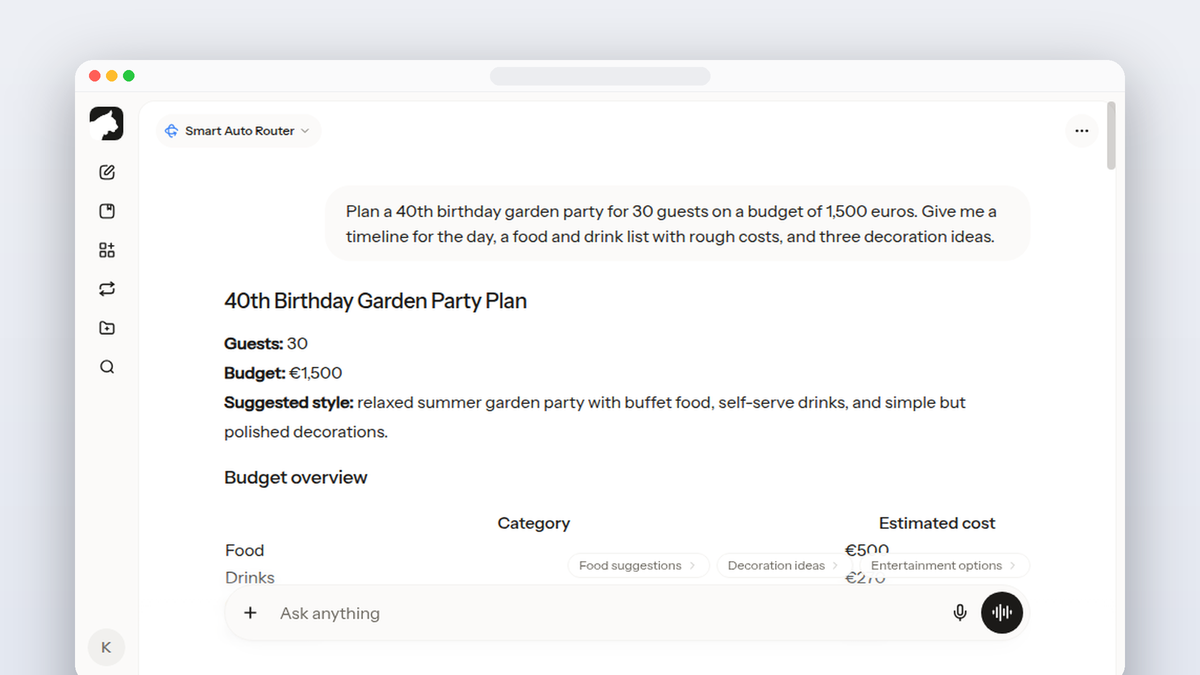
Use a table with columns for category, target amount, confirmed amount, deposit date, balance date and person responsible. A useful starting split might put the largest share into venue and food, then reserve separate amounts for photography, music, clothes, flowers, stationery, transport, accommodation, gifts and an emergency reserve. The exact percentages are yours to decide. AI is useful for spotting missing categories and showing how a change affects the rest of the plan.
Ask for three versions: a full plan, a plan that removes one optional feature and a plan that protects the guest experience if a supplier becomes more expensive. Do not let the model call something a saving without explaining what changes. A smaller cake, fewer printed menus or a playlist instead of a DJ has a different effect from removing accessible transport or a meal option.
The six-month timeline
Six months out, decide the guest estimate, venue, broad schedule, ceremony or hosting format, and the suppliers that become difficult to replace. Four to five months out, confirm food, photography, music and attire, then start the guest information page or invitation wording. Three months out, review travel details, readings, speeches, decorations and any legal or cultural requirements. Ask AI to turn these decisions into a calendar with an owner and a reason for each deadline.
At two months, collect missing addresses, check invitation proofs, confirm dietary questions and make a first seating draft. At one month, check balances, supplier arrival times, weather alternatives and the list of people who need help on the day. Put every payment and confirmation in one place. A plan is useful only when you can see what is waiting and who can move it forward.
The six-week countdown
Six weeks before the event, stop collecting new ideas unless they solve a real problem. Send the invitation or event information that is still outstanding, chase people who have not replied and ask confirmed guests for dietary or access details. Confirm the final guest count deadline with the caterer, venue and rental company. Ask AI to make a six-week checklist where each item has a date, owner and evidence of completion.
At four weeks, share the schedule with the wedding party, family helpers and vendors. At three weeks, check table names, transport, readings, music requests and emergency contacts. At two weeks, finalize seating, menus and printed material. During the final week, confirm delivery windows, pack a small repair kit and stop making changes that create more risk than joy.
Questions to ask every vendor
Ask a venue about access times, noise limits, wet-weather plans, power, toilets, accessibility, cleanup, deposits and what is included in the room price. Ask a caterer about serving staff, allergens, children, leftovers, late guests, tableware, water and the final number deadline. Ask a photographer how they handle family group photographs, breaks, storage, delivery timing and whether a second shooter is included. If you are weighing similar tools, see our practical guide to AI for parents.
Ask a musician or DJ about setup, power, announcements, requests, volume and what happens if equipment fails. Ask a florist about substitutions, delivery, setup, collection and flower availability in the season. Tell AI to turn each vendor's answer into a comparison row, then mark every item that needs a human follow-up. A neat table should expose uncertainty rather than hide it.
Guest messages that sound like you
For a save the date, keep the essential information near the beginning: who is celebrating, the date, the location area and when formal details will follow. For an RSVP chase, be kind but clear about the deadline and the action you need. For dietary questions, name the response date and give guests a simple way to say no requirements. Ask AI for a warm version, a very short version and a version for a guest who needs extra help.
Write a save the date for our wedding. Keep it warm, short and personal. Include the date, city and a note that the invitation will follow. Do not invent a venue or travel details.
Draft an RSVP reminder for a guest who has not replied. Give a clear deadline, avoid guilt and ask whether they need accessibility or travel information.
Write a dietary request message for confirmed guests. Ask about allergies, religious requirements and preferences, and explain that accurate answers help the caterer plan safely.
Seating logic without family drama
Start with facts rather than trying to make a perfect social diagram. Mark households, children, mobility needs, language preferences, people who should sit together and combinations that need distance. Then decide whether the event works better with assigned tables, assigned seats or a few reserved places. AI can help you generate several layouts, but only you know which history is sensitive and which guest will feel comfortable.
Ask for a conflict check that lists the reason for each suggested separation without naming private family details. Try a practical layout first, then test food service, speeches, wheelchair movement, sight lines and access to toilets. A seating plan that looks balanced on paper can be awkward for a guest who cannot hear the speeches or needs a clear route out.
Build a day-of run sheet
A day-of run sheet should include time, action, location, owner, supplier contact and backup. Add setup, deliveries, photographs, ceremony or welcome, food, speeches, music changes, cake or dessert, transport, cleanup and the moment gifts or personal items go home. Ask AI to create a guest-facing schedule and a detailed helper version. Do not give guests the version that contains private phone numbers or sensitive logistics.
Choose one calm person to answer questions so the couple or host is not interrupted every ten minutes. Put printed copies with the venue, photographer, caterer and lead helper, then keep a phone copy offline. Add a short line for what happens if the ceremony runs late, weather changes or a supplier cannot reach the venue. A good run sheet protects attention rather than controlling every minute.
Model comparison for event planning
| Model type | Useful strength | Good event task |
|---|---|---|
| Reasoning model | Constraints and trade offs | Budget options and seating logic |
| Long context model | Large guest and vendor notes | Timeline and question tracking |
| Multimodal model | Images and visual details | Room layout and decoration ideas |
| Krater | 400+ models and saved workflows | Compare planning approaches in one workspace |
Use a reasoning model for decisions with competing constraints, a long context model for the guest and vendor packet, and a multimodal model when you have a room photograph or floor plan. Krater lets you compare those approaches, save planning material in Keep and use a Persona for the kind of calm coordinator you want.
Common mistakes and a calmer process
The first mistake is asking AI for a complete wedding plan before writing down the facts. The second is treating an estimate as a quote. The third is sending a message that sounds polished but does not answer the guest's actual question. Other common problems include forgetting setup time, assigning every task to the couple and printing a seating plan before the final RSVP list is stable.
Use AI as a planning assistant, then verify every supplier detail, payment, legal requirement, allergy response and travel instruction with the responsible person. Keep one dated source of truth and add a short note when a decision changes. The point is not to make the celebration look automated. It is to make the invisible work easier to share.
Turn the plan into a shared handoff
A good event plan should still work when the person who created it is busy greeting guests. Make a short handoff for the coordinator, a family member or a trusted friend. Include the final guest count, arrival windows, people who can approve a change and a phone number for each supplier. Keep payment details out of the general document.
Use /keep for final guest and vendor notes, /tasks for owned actions and /personas for a calm coordinator voice when drafting updates. Ask the model to turn the plan into a one page version, then compare it with the full document. The shorter version should point to the source of truth rather than silently dropping a constraint.
In the final week, ask for a change log instead of another complete plan. Give it the confirmed schedule and latest RSVP list, then request only changed decisions, affected people and open actions. This keeps revisions manageable and gives the person running the day a clear view of what matters. Add a final line naming who can make a decision when the couple or host is unavailable. Keep a printed emergency contact list in the same folder as the run sheet. Put the final guest list, vendor arrival notes and accessibility information in the same handoff, with a note showing which details are confirmed and which still need an answer.
Frequently Asked Questions
Can AI plan a wedding by itself?
No. It can organize options and drafts, but you decide what fits your guests, values, relationships and confirmed supplier information.
Can AI make a celebration plan from a budget?
It can suggest categories and trade offs. Treat every amount as an estimate until a vendor confirms it and keep an emergency reserve.
How should I use AI for guest messages?
Give it the facts, relationship and tone you want, ask for options, then edit the final message so it sounds like you.
Can AI create a seating plan?
It can test layouts against the constraints you provide, but you must apply your own knowledge of family history, comfort and accessibility.
What should go on a day-of run sheet?
Include times, owners, locations, supplier contacts, deliveries, transitions, backups and the person who handles questions.
Which model is best for event planning?
Use reasoning for trade offs, long context for notes and multimodal input for room or decoration images. Compare the real task.
The Bottom Line
AI is most helpful when a celebration feels too large to hold in your head. Use it to expose missing decisions, draft kind messages, organize vendor answers and create a run sheet that another person can use. Keep the final choices human, verify every supplier detail and leave room for the event to feel like your people rather than a spreadsheet.