

Best AI for Meeting Notes to Actions: 8 Models Tested
A task level comparison of AI models for turning an operations transcript into a summary, action table and open questions.
Tested: September 2026

Key Takeaways
- The meeting notes to action items task is a narrow test of a three sentence summary, exact action owners and deadlines, plus unresolved questions, not a general measure of intellig
- The higher and lower examples below show the difference more clearly than a score alone. Read the answer against the brief, then read the review note for the constraint that change
- Use GPT-6 Astra as the first model to test for a three sentence summary, exact action owners and deadlines, plus unresolved questions, then compare it with one other model on the e
- Read the output against the original brief line by line. Check names, numbers, dates, owners and the requested format before improving the prose. A polished answer that changes one
- A single task cannot represent every workbook, meeting or agreement. The benchmark uses a fixed English brief, three runs and default reasoning settings, so it is evidence for a sh
- A model comparison has lasting value when it becomes a review habit. Save the brief, the accepted answer and the correction that mattered. The next person can then start with the b
The brief behind the score
The meeting notes to action items task is a narrow test of a three sentence summary, exact action owners and deadlines, plus unresolved questions, not a general measure of intelligence. GPT-6 Astra leads this task at 85.0, but the details in the brief explain why the ranking matters to an operator.
Meeting notes to action items
Brief: Turn this meeting transcript into: 1) a 3 sentence summary, 2) a table of action items with columns Owner, Action, Deadline, and 3) a list of open questions. Only include decisions and actions that were actually agreed in the transcript. If a deadline was not stated, write 'not set'.
Input: [Transcript, 5 Sept 2026, weekly ops call] Sara: ok so the Q4 promo. Jonas, can you get the landing page draft to me by the 12th? Jonas: yeah 12th works. I need the final discount from finance first though. Sara: Priya, can finance confirm the discount level? More constraints appear in the brief below.
The point of this brief was not to reward a general essay. It asked for a particular format, a particular length and careful use of the supplied facts.
The central risk is assigning work that the group did not actually assign. A useful note keeps the warehouse owner unresolved when the meeting leaves it unresolved, even if another speaker volunteered for a different task.
Two answers worth studying
The higher and lower examples below show the difference more clearly than a score alone. Read the answer against the brief, then read the review note for the constraint that changed the outcome.
| Example | Output and review |
|---|---|
| Higher-scoring example GPT-6 Astra, run 1 | ## 1) Summary Jonas agreed to send Sara the Q4 promo landing page draft by 12 September, but needs finance’s final discount first; Priya agreed to provide an answer Tuesday. Aero Buds returns have risen from 5% to 9%, and Priya agreed to pull the return reasons by the end of the week. The warehouse requested Black Friday stock numbers by 20 September, but the decision on who owns warehouse coordination was deferred until next week. ## 2) Action items | Owner | Action | Deadline | |---|---|---| | Jonas | Send Sara the Q4 promo landing page draft; dependent on finance’s final discount. | 12 September 2026 | | Priya | Provide finance’s answer on the final discount level. | Tuesday | | Priya | Pull the Aero Buds return reasons. | end of the week | | not assigned | Decide who owns warehouse coordination for Black Friday stock. | next week | ## 3) Open questions - What is the final Q4... Review note: Accurate and well-structured, correctly avoiding the Jonas/warehouse and 15% traps, but the warehouse action is logged as 'decide owner by next week' rather than the required stock-numbers task with the stated 20th deadline in the table. |
| Lower-scoring example Claude Fable 5.1, run 1 | Summary The team discussed the Q4 promo: Jonas will deliver the landing page draft to Sara by 12 September, but he needs the final discount level from finance first, which Priya will confirm on Tuesday (likely 15%, not yet confirmed). Returns on the Aero Buds have risen from 5% to 9%; Jonas suspects ear-tip sizing, and Priya will pull the return reasons by the end of the week. The warehouse has asked for Black Friday stock numbers by the 20th, but no owner was assigned - this will be decided next week. Action items | Owner | Action | Deadline | |---|---|---| | Jonas | Send Q4 promo landing page draft to Sara (dependent on finance confirming the discount) | 12 Sept 2026 | | Priya | Confirm the Q4 promo discount level with finance | Tuesday (exact date not stated in transcript) | | Priya | Pull return reasons for the Aero Buds | End of the week (exact date not stated) | | Not assigned... Review note: The summary and open questions are sound, but the warehouse action incorrectly becomes an ownership decision due next week rather than providing Black Friday stock numbers by the 20th with ownership undecided. |
A workflow for the result
Use GPT-6 Astra as the first model to test for a three sentence summary, exact action owners and deadlines, plus unresolved questions, then compare it with one other model on the exact source material your team uses. Keep the prompt narrow, ask for the requested format and make the final review visible.
In Krater, pick the model in the model picker and use Compare for a side by side check. Save the audience, format, source rules and approval standard in a Persona when the work repeats. The benchmark points to a starting model; it does not remove the need to inspect the actual output.
What to check before you ship the answer
Read the output against the original brief line by line. Check names, numbers, dates, owners and the requested format before improving the prose. A polished answer that changes one of those details is less useful than a plain answer that preserves them.
Run one small test that would expose the likely mistake. Add a new spreadsheet row, read the action table against the transcript or compare every contract date with the clause. Keep the test result with the approved output.
When a source is incomplete, require the model to say what is missing. The reviewer should be able to tell the difference between a supplied fact, a reasonable interpretation and an open question.
Where the benchmark stops
A single task cannot represent every workbook, meeting or agreement. The benchmark uses a fixed English brief, three runs and default reasoning settings, so it is evidence for a shortlist rather than a promise about every business workflow.
The model still needs a source that is complete enough to review. Better prompting cannot repair a missing policy, an absent deadline or a clause that was copied without its definitions and schedules.
Use the result to choose what to test next. Keep the final decision with the person who owns the workbook, meeting, customer promise or contract review.
Turn the result into a team habit
A model comparison has lasting value when it becomes a review habit. Save the brief, the accepted answer and the correction that mattered. The next person can then start with the business rule instead of a blank prompt.
Use a Persona for recurring context and a Task for the review date. Keep the final source in the system that owns it, then use Krater to prepare the summary, question list or handoff around that source.
When the brief changes, rerun the comparison. A new policy, workbook layout or contract schedule can change which model is easiest to approve even when the benchmark score remains unchanged.
Make the reviewer visible
Name the person who approves the answer and the source they should use. A clear owner prevents a formula, action list or clause summary from circulating without anyone responsible for the final check.
Record the correction when the reviewer finds one. That note improves the next prompt and gives the team a practical example of the standard it expects.
The chart and the decision
The selected work covers meeting notes to action items. The chart is useful because it keeps the recommendation tied to those jobs instead of turning the overall ranking into a universal rule.
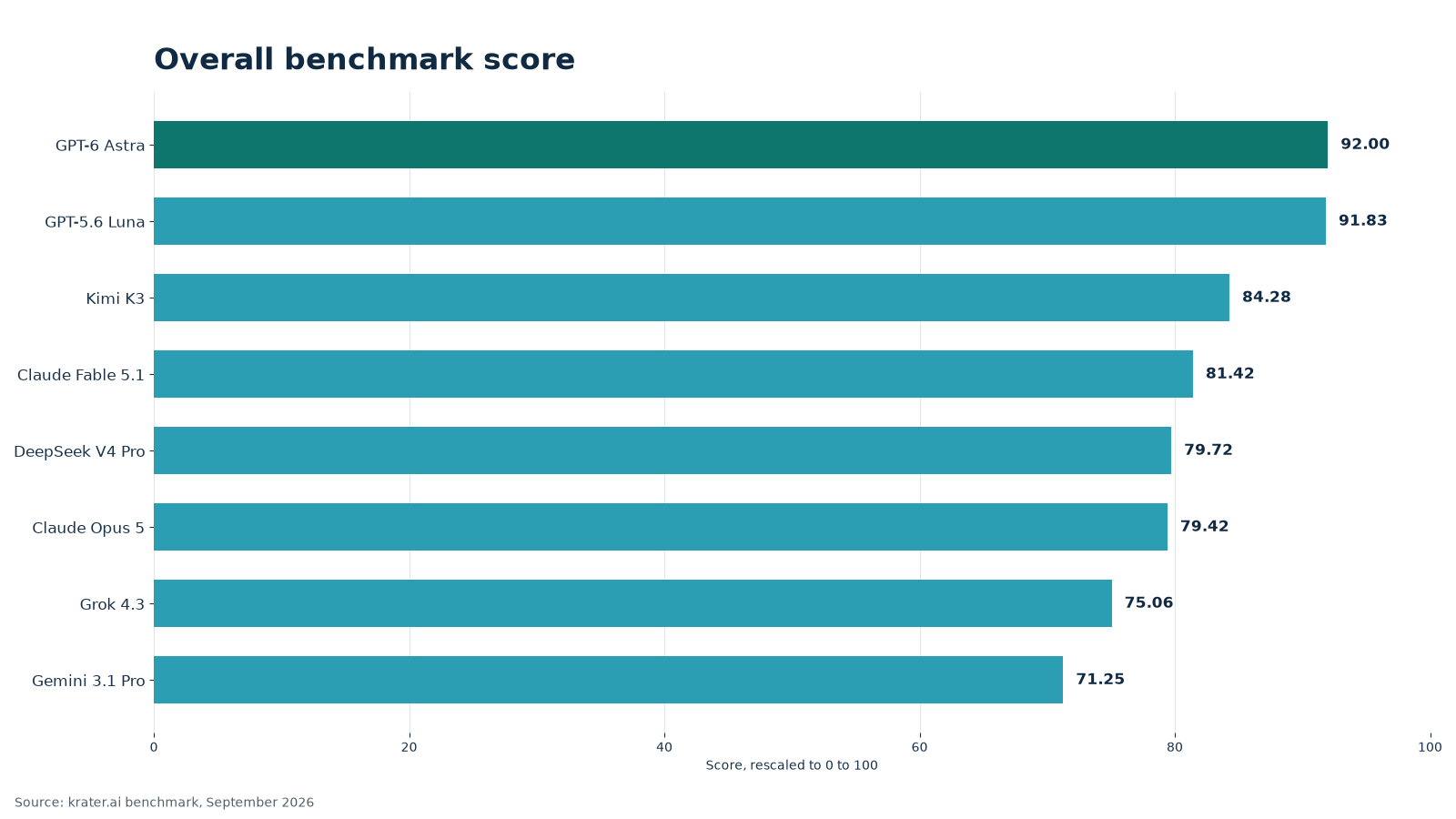
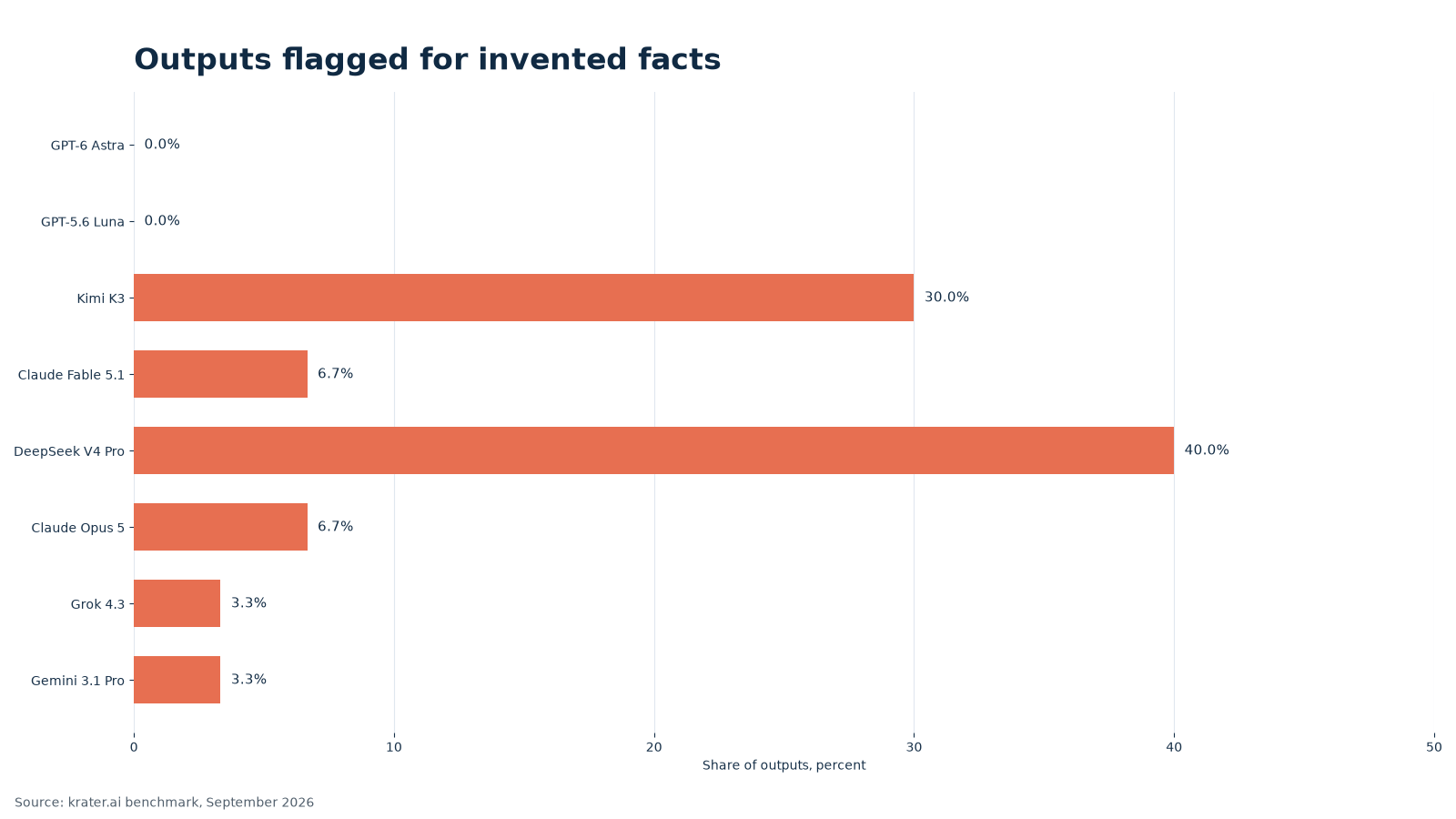
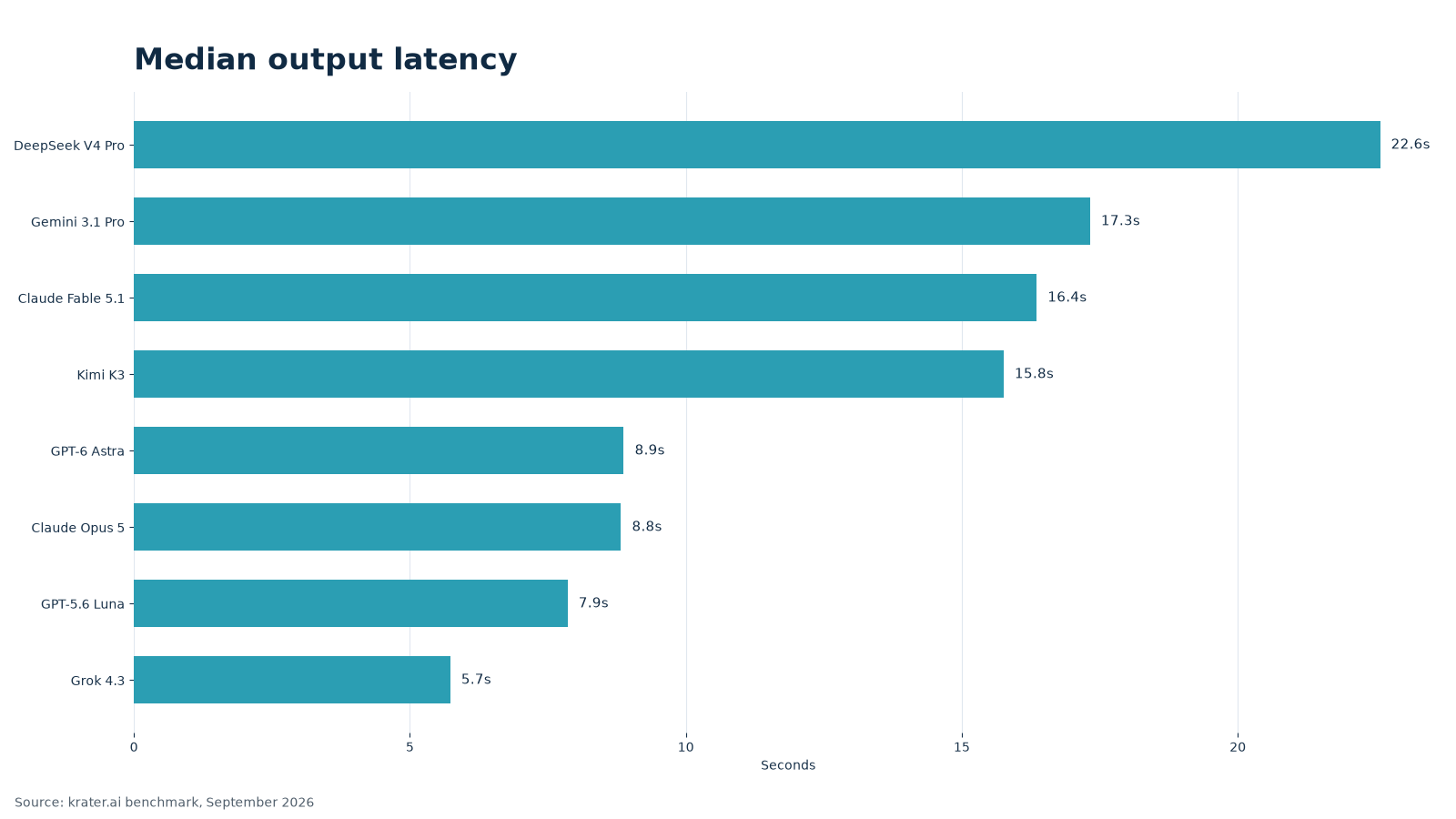
Use the winner as the first comparison, then check the runner-up on a real brief. A model that loses a few points may still be the better operational fit if it follows your house format with less editing. The next step is our guide to AI for real estate agents.
A repeatable workflow
How to use this in Krater
The benchmark is a shortlist, not a reason to hand every job to one model. Pick a candidate in the model picker, then use Compare to run the same brief side by side. Look at the facts that survived, the format that came back and how much editing remains.
When the work repeats, create a Persona with the audience, house style, prohibited claims, approval rules and output format. Keep the source material in Keep and assign review work in Tasks. Krater provides 400+ models, so a team can keep one dependable choice for important work while testing another for a different format or turnaround. For the workflow side of this, see our guide to AI for social media management.
Useful commands for this kind of work include /research, /summarize, /document, /image. Use them to organize source material, turn long notes into a brief, create a structured deliverable or prepare a visual direction. The operator still approves the final output.
Method and limits
The test covers 10 business tasks, 3 runs per model and a generation temperature of 0.7. The briefs cover Product description, Amazon listing bullets, Meta ad variants, Customer support reply, SEO title and meta description, Abandoned cart email sequence, Spreadsheet formula, Contract clause summary, Meeting notes to action items, Product photo prompt. Three independent judges were used: GPT-6 Astra, Claude Opus 5, Gemini 3.1 Pro. They did not see the name of the model they were reviewing, and a judge was left out when it came from the same company as that model. Each response was scored on 5 criteria from 1 to 5: correctness, brief, usefulness, clarity, ship_ready. The mean was rescaled to 0 to 100, then averaged across runs and tasks. See also our guide to AI personal assistants for business.
This is a focused view of 1 task scores inside a 10-task comparison. AI judges, English prompts, one month and default reasoning settings all shape the result. Treat it as evidence for a shortlist, then test the briefs that matter to your team.
Frequently Asked Questions
Which model leads for meeting notes to action items?
GPT-6 Astra leads this group at 85.0. That is a useful starting point, but your own facts and approval rules should decide the final choice.
Are these quality scores the same as usage popularity?
No. The scores come from controlled business briefs. Usage popularity is covered separately in the usage article.
Why can a high-scoring answer still need editing?
A response can follow the facts and still need a warmer tone, tighter format or a final brand review.
How do I stop a model inventing product details?
State what the source does not say, require source-only claims and check every named feature before publishing.
How can I compare models on my own work?
Pick two models in Krater, run the same brief in Compare and save the approved instructions in a Persona.
How many models are available in Krater?
Krater provides 400+ models across text, research, image, video, voice and other workflows.
The Bottom Line
For meeting notes to action items, start with GPT-6 Astra, compare it with GPT-5.6 Luna and keep the source facts visible through review. The best choice is the one your team can approve and ship without risky additions. We go deeper on this in our plain language AI guide for small businesses.